
SECTION 1. IDENTIFICATION
Product identifier: Sodium Diuranate
Synonym: Sodium Uranate
Product number: U30704
Formula: Na₂O(UO₃)₂·6H₂O
Molecular formula: Na₂O₇U₂
CAS RN: 13721-34-1
Recommended use: Laboratory chemicals and manufacture of substances.
Restrictions on use: For trained and authorized professional use only. Handling, possession, storage, use, and transportation are subject to applicable radioactive-material, occupational-safety, hazardous-material, and environmental requirements.
Supplier:
International Bio-Analytical Industries, Inc.
3495 N. Dixie Hwy., Unit #8, Boca Raton, FL 33431
Telephone: 561-826-0061
Fax: 561-892-8450
Emergency telephone:
INFOTRAC
1-800-535-5053 (U.S. & Canada)
+1-352-323-3500 (International)
SECTION 2. HAZARD(S) IDENTIFICATION
Classification under OSHA Hazard Communication Standard, 29 CFR 1910.1200:
Acute toxicity oral, Category 2: H300 Fatal if swallowed.
Acute toxicity inhalation, Category 2: H330 Fatal if inhaled.
Specific target organ toxicity repeated exposure, Category 2: H373 May cause damage to organs through prolonged or repeated exposure.
Acute aquatic toxicity, Category 2: H401 Toxic to aquatic life.
Chronic aquatic toxicity, Category 2: H411 Toxic to aquatic life with long-lasting effects.
Signal word: DANGER
GHS pictograms:
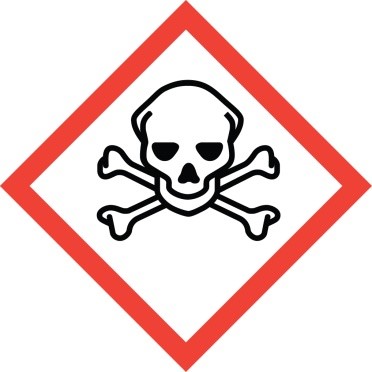
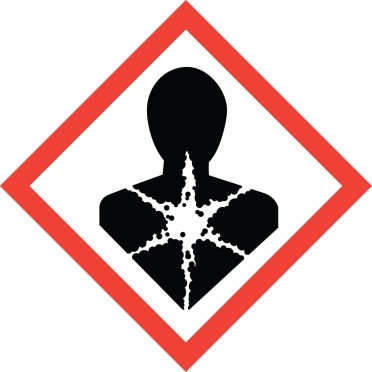
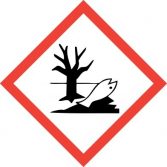
Hazards not otherwise classified: RADIOACTIVE. Radiological hazards and controls are additional to OSHA/GHS chemical hazard communication.
Hazard statements:
H300 Fatal if swallowed.
H330 Fatal if inhaled.
H373 May cause damage to organs through prolonged or repeated exposure.
H401 Toxic to aquatic life.
H411 Toxic to aquatic life with long-lasting effects.
Precautionary statements:
P260 Do not breathe dust/fume/gas/mist/vapors/spray.
P264 Wash skin thoroughly after handling.
P270 Do not eat, drink or smoke when using this product.
P271 Use only outdoors or in a well-ventilated area.
P273 Avoid release to the environment.
P284 Wear respiratory protection.
P301+P310 IF SWALLOWED: Immediately call a POISON CENTER/doctor.
P304+P340 IF INHALED: Remove person to fresh air and keep comfortable for breathing.
P310 Immediately call a POISON CENTER/doctor.
P320 Specific treatment is urgent.
P330 Rinse mouth.
P391 Collect spillage.
P403+P233 Store in a well-ventilated place. Keep container tightly closed.
P405 Store locked up.
P501 Dispose of contents/container in accordance with applicable regulations.
SECTION 3. COMPOSITION / INFORMATION ON INGREDIENTS
Chemical name: Sodium Uranate / Sodium Diuranate
CAS RN: 13721-34-1
Formula: Na₂O(UO₃)₂·6H₂O
Molecular formula: Na₂O₇U₂
Molecular weight: 634.03 g/mol
SECTION 4. FIRST-AID MEASURES
General advice: Consult a physician after significant exposure and provide this SDS. Move the exposed person away from the source of exposure without placing responders at risk. Consider both chemical toxicity and radioactive contamination.
Inhalation: Move the exposed person to fresh air. If breathing is difficult, trained personnel may provide appropriate respiratory support. If not breathing, trained personnel should provide CPR/artificial respiration as appropriate. Obtain immediate medical attention.
Skin contact: Remove contaminated clothing. Wash exposed skin thoroughly with soap and water. Obtain medical attention if symptoms persist or after significant exposure. Manage contaminated clothing under applicable radiological-contamination procedures.
Eye contact: Immediately flush eyes with water for at least 15 minutes while holding eyelids apart. Remove contact lenses if easy to do. Obtain medical attention.
Ingestion: Rinse mouth with water if conscious. Do not induce vomiting unless directed by qualified medical personnel. Do not give anything by mouth to an unconscious person. Obtain immediate medical attention.
Most important symptoms/effects: Symptoms may be delayed and include conjunctivitis and blood disorders among possible effects. Significant internal uranium exposure may produce systemic toxicity, and internal radioactive contamination presents an additional radiological hazard.
Indication of immediate medical attention/special treatment: Immediate medical evaluation is recommended following significant ingestion, inhalation, or suspected internal contamination. Specific treatment should be determined by qualified medical and radiation-safety professionals.
SECTION 5. FIRE-FIGHTING MEASURES
Suitable extinguishing media: Water spray, alcohol-resistant foam, dry chemical, or carbon dioxide may be used for the surrounding fire as appropriate to the circumstances and facility emergency procedure.
Specific hazards arising from the chemical: Potential decomposition products include carbon oxides and uranium oxides. Fire, smoke, dust, debris, and firefighting runoff may spread radioactive contamination.
Special protective equipment and precautions for firefighters: Wear positive-pressure SCBA and protective clothing appropriate to the fire. Approach from upwind where possible. Establish radiological controls and notify the Radiation Safety Officer or qualified radiological emergency-response authority.
Additional precautions: Contain contaminated firefighting runoff and prevent uncontrolled environmental release.
SECTION 6. ACCIDENTAL RELEASE MEASURES
Personal precautions: Evacuate/isolate the affected area as appropriate. Avoid breathing dust. Keep unnecessary personnel away. Wear appropriate protective equipment and follow the facility’s radioactive-material response procedures.
Emergency procedures: Notify the Radiation Safety Officer/radiological response authority. Assess airborne and surface contamination before cleanup.
Environmental precautions: Prevent material from entering drains, soil, surface water, or groundwater. Prevent further leakage or spillage if safe to do so.
Methods and materials for containment and cleaning up: Trained personnel should collect spilled material using approved radioactive contamination control methods while minimizing dust generation. Place recovered material and contaminated cleanup media in properly controlled, closed containers for radioactive-waste management. Do not use compressed air.
SECTION 7. HANDLING AND STORAGE
Precautions for safe handling: Avoid contact with skin and eyes. Avoid formation of dust and aerosols. Provide local exhaust/process ventilation or appropriate containment where dust can form. Only trained and authorized personnel should handle the material or its container.
Radiological controls: Apply the facility’s radioactive-material handling procedures, contamination controls, surveys, dosimetry, access restrictions, and ALARA principles as applicable.
Conditions for safe storage: Keep the container tightly closed in a dry, well-ventilated, secure area. Protect from physical damage and unauthorized access.
Incompatibility: Strong oxidizing agents. Maintain separation from incompatible chemicals based on validated facility compatibility procedures.
SECTION 8. EXPOSURE CONTROLS / PERSONAL PROTECTION
OSHA TWA 0.05 mg/m³ for Sodium Uranate and ACGIH TWA 0.2 mg/m³, confirmed human carcinogen.
ACGIH STEL 0.6 mg/m³ and NIOSH TWA of 0.05 mg/m³.
Radiological exposure controls: Use appropriate dosimetry, contamination surveys, airborne monitoring, time/distance/shielding controls, and written procedures under the applicable radioactive-material license and facility radiation-protection program.
Engineering controls: Use local exhaust ventilation, process enclosure, glovebox, chemical fume hood, or other containment capable of controlling airborne uranium-containing dust.
Eye/face protection: Use safety glasses and a face shield where particle projection or splash hazards are possible.
Skin protection: Wear appropriate protective gloves and protective clothing. Inspect gloves before use and replace contaminated or damaged gloves. Wash hands thoroughly after handling.
Glove information from source: For full or splash contact, the source lists nitrile rubber, minimum layer thickness 0.11 mm, breakthrough time 480 minutes, based on the tested Dermatril® material. This is advisory and must be verified for the actual conditions of use.
Body protection: Use a complete chemical-protective suit when warranted by the concentration and amount handled, with radiological protective clothing as required by the facility program.
Respiratory protection: Use respiratory protection under a compliant written respiratory-protection program. Full-face particulate protection such as N100/P3 as a backup to engineering controls and positive-pressure supplied-air/SCBA protection for high-hazard or IDLH conditions. Selection must be based on measured/anticipated concentration and radiological requirements.
Environmental exposure controls: Prevent leakage or spillage. Do not allow the product to enter drains. Avoid uncontrolled environmental release.
SECTION 9. PHYSICAL AND CHEMICAL PROPERTIES
Physical state: Solid.
Appearance: Yellow-orange crystalline solid.
Odor: No specific odor value
pH: No data available.
Solubility: Water-insoluble; soluble in dilute acids.
Decomposition temperature: 275 °C (527 °F).
Relative density: 2.890 g/cm³.
Molecular weight: 634.03 g/mol.
Flammability: Not classified as a flammable solid.
Flash point: Not applicable to an inorganic solid.
Auto-ignition temperature: No data available.
Initial boiling point/boiling range: No data available; decomposition is expected before normal boiling.
Vapor pressure: No data available; negligible vapor pressure is expected for a nonvolatile inorganic solid.
Relative vapor density: Not applicable to a nonvolatile solid.
Partition coefficient n-octanol/water: No data available.
SECTION 10. STABILITY AND REACTIVITY
Reactivity: Strong oxidizing agents are incompatible materials.
Chemical stability: Stable under recommended storage conditions.
Conditions to avoid: Avoid unnecessary dust generation, physical damage, and contact with incompatible materials.
Incompatible materials: Strong oxidizing agents.
Hazardous decomposition products: Uranium oxides and carbon oxides may be generated under fire/thermal decomposition conditions.
Hazardous polymerization: No hazardous polymerization is expected under normal conditions.
SECTION 11. TOXICOLOGICAL INFORMATION
Likely routes of exposure: Inhalation of dust, ingestion, skin contact, and eye contact. Internal radioactive contamination is an additional concern.
Acute toxicity oral: LD50, rat, 204 mg/kg. Reported observations include tremors and changes in body temperature.
Acute toxicity subcutaneous: LD50, rat, 8.300 mg/kg.
Skin corrosion/irritation: No product-specific data available.
Serious eye damage/eye irritation: Eye contact may cause irritation; flush immediately after exposure.
Respiratory or skin sensitization: No product-specific data available.
Germ cell mutagenicity: The material contains a radioactive isotope that may produce genetic mutation. Radiological risk depends on isotope, activity, exposure pathway, and dose.
Carcinogenicity: The material contains a radioactive isotope that may produce cancer. No component at or above 0.1% is identified.
Specific target organ toxicity single exposure: No additional product-specific classification beyond the acute-toxicity hazard.
Specific target organ toxicity repeated exposure: Category 2. May cause damage to organs through prolonged or repeated exposure.
Aspiration hazard: Not applicable to a solid.
SECTION 12. ECOLOGICAL INFORMATION
Ecotoxicity: Acute Aquatic Toxicity Category 2 and Chronic Aquatic Toxicity Category 2 that it is toxic to aquatic life with long-lasting effects.
Persistence and degradability: No data available.
Bioaccumulative potential: No data available.
Mobility in soil: No product-specific data available.
Other adverse effects: An environmental hazard cannot be excluded in the event of unprofessional handling or disposal. Prevent uncontrolled environmental release.
SECTION 13. DISPOSAL CONSIDERATIONS
Waste treatment methods: Manage sodium uranate and uranium-contaminated materials in accordance with the applicable radioactive-material license, NRC/Agreement State requirements, Federal/state/local hazardous-waste requirements, and facility radioactive-waste procedures.
Product disposal: Do not discharge into drains, soil, surface water, or groundwater. Do not place in ordinary trash. Waste treatment and final disposition must be determined by authorized radioactive-waste and EHS personnel.
Contaminated packaging: Manage as radioactive-contaminated material unless formally surveyed and released under an authorized procedure.
SECTION 14. TRANSPORT INFORMATION
Transport regulations: U.S. DOT 49 CFR Parts 100–185, IATA, ICAO, and IMDG.
UN/ID number: To be determined case-by-case.
Proper shipping name: To be determined from the current applicable radioactive-material transport entry based on isotope, activity, quantity, package, and applicable exceptions.
Hazard class: Class 7 — Radioactive, where regulated as radioactive material.
Packing group: Not assigned to Class 7 radioactive material.
Special precautions: Radioactive-material packaging, marking, labeling, package surveys, shipping papers, and carrier requirements must be satisfied before shipment. Shipment-specific classification must be performed by a qualified dangerous-goods/radioactive-material shipper.
SECTION 15. REGULATORY INFORMATION
OSHA: 29 CFR 1910.1200 Hazard Communication Standard applies to chemical hazard communication requirements for covered workplaces.
Radiological requirements: Applicable NRC or Agreement State radioactive-material requirements, including licensing, dose, contamination, handling, storage, and security requirements, must be followed.
U.S. DOT: 49 CFR Parts 171–180 apply to regulated hazardous-material transportation.
SARA 302: No chemicals in the material are subject to SARA Title III Section 302 reporting requirements.
SARA 313: The material does not contain chemical components with known CAS numbers above the applicable de minimis reporting levels.
SARA 311/312: Acute Health Hazard; Chronic Health Hazard.
Massachusetts Right To Know: Sodium Uranate.
Pennsylvania Right To Know: Sodium Uranate.
New Jersey Right To Know: Sodium Uranate, CAS 13721-34-1.
California Proposition 65: The product does not contain chemicals known to the State of California to cause cancer, birth defects, or other reproductive harm.
Worker training: Employers must provide effective information and training about hazardous chemicals as required by OSHA HazCom and applicable radioactive-material program requirements.
SECTION 16: OTHER INFORMATION
Copyright © 2015 International Bio-Analytical Industries, Inc.
Permission is granted to make unlimited paper copies for internal use only.
International Bio-Analytical Industries, Inc. requires recipients of its materials to comply with 29 CFR 1910.1200(h), which mandates that employers provide employees with effective information and training on hazardous chemicals present in the workplace.
The information contained in this Safety Data Sheet is believed to be accurate as of the date of revision and is provided in good faith. However, this information is intended to serve as a guide only, and recipients are encouraged to exercise independent judgment regarding its accuracy, completeness, and suitability for their specific applications. International Bio-Analytical Industries, Inc., shall not be held liable for any direct or indirect damage resulting from the use of this information.
International Bio-Analytical Industries, Inc. makes no warranties, express or implied, including, but not limited to, warranties of merchantability or fitness for a particular purpose. This information is provided without warranty, and any use of the product that does not conform to this Safety Data Sheet, or that is used in combination with any other product or process, is the sole responsibility of the user.
Revision Date: 03/11/2026