
SECTION 1. IDENTIFICATION
Product Name: Thorium Carbide
Chemical Name: Thorium Monocarbide
Synonym: Thorium(IV) Carbide
Chemical Formula: ThC
CAS Number: 12012-16-7
EC Number: 234-574-0
Molecular Weight: 244.0488 g/mol
Recommended Use: Laboratory research and development; research involving licensed radioactive material.
Restrictions on Use: Professional use only. Not intended for consumer use. Use only by personnel trained in hazardous-chemical and radioactive-material handling.
Supplier:
International Bio-Analytical Industries, Inc.
3495 N. Dixie Hwy., Unit #8, Boca Raton, FL 33431
Telephone: 561-826-0061
Fax: 561-892-8450
Emergency Telephone
INFOTRAC
USA/Canada: 1-800-535-5053
International: 1-352-323-3500
SECTION 2. HAZARD(S) IDENTIFICATION
GHS Classification (working classification for SDS presentation; final hazard-category determination requires EHS review and supporting product-specific data):
Acute Toxicity – Oral: Category 2 (H300: Fatal if swallowed).
Acute Toxicity – Inhalation: Category 2 (H330: Fatal if inhaled).
Specific Target Organ Toxicity – Repeated Exposure: Category 2 (H373: May cause damage to organs through prolonged or repeated exposure).
Substances/mixtures which, in contact with water, emit flammable gases: Category 3 (H261: In contact with water releases flammable gas) – working classification based on reported hydrolysis/decomposition with gaseous products; confirm category by applicable test data before controlled issuance.
Radiological carcinogenic hazard: Internal exposure to thorium alpha radiation can cause cancer. No separate chemical carcinogenicity category is assigned here without a product-specific chemical carcinogenicity determination.
Signal Word: DANGER.
GHS Pictograms:
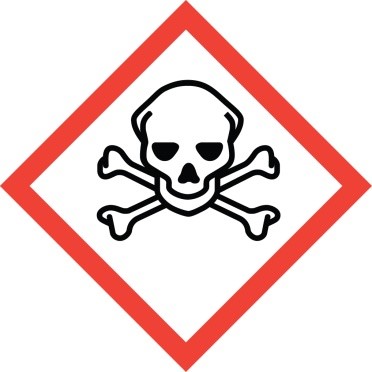
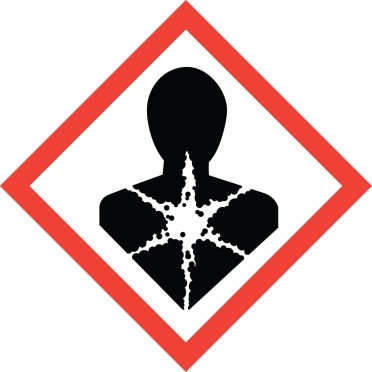

Radiation caution symbol: Supplemental radiological warning (not a GHS pictogram).

Hazard Statements:
H300 – Fatal if swallowed.
H330 – Fatal if inhaled.
H373 – May cause damage to organs through prolonged or repeated exposure.
H261 – In contact with water releases flammable gas.
Other Hazard / Hazard Not Otherwise Classified: Radioactive material. Thorium-containing dust can present an internal radiological hazard if inhaled or ingested. Control airborne radioactive material and external/internal exposure under the applicable radiation-protection program.
Physical/Chemical Hazard: The supplied information reports decomposition in water. Because the reported reaction can produce gaseous products, this SDS uses a working Water-reactive Category 3 classification pending confirmation of the applicable reaction-rate/ignition criteria under OSHA Appendix B.12.
Precautionary Statements:
P260 – Do not breathe dust/fume/gas/mist/vapors/spray.
P264 – Wash thoroughly after handling.
P270 – Do not eat, drink, or smoke when using this product.
P273 – Avoid release to the environment.
P280 – Wear protective gloves/protective clothing/eye protection/face protection.
P284 – Wear respiratory protection where required by the workplace exposure assessment and written respiratory-protection program.
P301+P310 – IF SWALLOWED: Immediately call a POISON CENTER/doctor.
P304+P340 – IF INHALED: Remove person to fresh air and keep comfortable for breathing.
P320 – Specific treatment is urgently required; follow facility medical/radiological response procedures.
P370+P378 – In case of fire: Use an extinguishing agent appropriate for the surrounding fire. Do not use water directly on the material if water-reactivity is confirmed.
P402+P404 – Store in a dry place. Store in a closed container.
P501 – Dispose of contents/container in accordance with applicable radioactive-material and hazardous-waste requirements.
Additional radiological precaution: Maintain contamination controls and follow the facility Radiation Protection Program and ALARA principles.
SECTION 3. COMPOSITION / INFORMATION ON INGREDIENTS
Chemical Identity: Thorium Carbide (ThC)
CAS No.: 12012-16-7
EC No.: 234-574-0
Concentration: ≥99%*
Formula: ThC
Molecular Weight: 244.0488 g/mol
SECTION 4. FIRST-AID MEASURES
General Advice: Remove the affected person from the source of exposure. Obtain medical attention following significant exposure. Show this SDS to the attending physician. First-aid personnel should avoid unnecessary contamination. If radioactive contamination is suspected, follow the facility Radiation Protection Program and contact the Radiation Safety Officer (RSO).
Inhalation: Move the person to fresh air and keep at rest in a comfortable position for breathing. If breathing is difficult, oxygen may be administered by trained personnel. If not breathing, provide artificial respiration/CPR by trained personnel. Obtain medical attention. Notify the RSO if internal radioactive contamination is suspected.
Skin Contact: Remove contaminated clothing and shoes. Wash the affected area thoroughly with soap and water for at least 15 minutes. Do not abrade the skin. Obtain medical attention if irritation develops or significant contamination is suspected. Manage contaminated clothing under radioactive-material procedures.
Eye Contact: Immediately flush eyes with plenty of water for at least 15 minutes, holding eyelids open. Remove contact lenses if present and easy to do. Continue rinsing. Obtain medical attention.
Ingestion: Rinse mouth thoroughly with water. Do not induce vomiting unless directed by medical personnel. Never give anything by mouth to an unconscious person. Obtain immediate medical attention following significant ingestion. Contact the RSO if radioactive internal contamination is suspected.
Most Important Symptoms/Effects: Compound-specific human toxicological data are limited. Dust may cause respiratory, eye, and gastrointestinal irritation. Inhalation or ingestion can result in internal radiation exposure; health effects depend on radionuclide, chemical form, activity, route of intake, and dose.
Indication of Immediate Medical Attention: Treat symptomatically. For suspected significant internal radioactive contamination, consult the RSO and appropriate medical/radiological personnel.
SECTION 5. FIREFIGHTING MEASURES
Suitable Extinguishing Media: Use an extinguishing agent appropriate for the surrounding fire and physical condition of the product. Trained emergency personnel should select the medium for a localized fire involving the material.
Unsuitable Extinguishing Media: Avoid direct application of water to Thorium Carbide because the material is reported to decompose in water and the working classification addresses emission of flammable gas. Do not use methods that could disperse radioactive dust.
Specific Hazards: Radioactive material. Heating or combustion may produce thorium-containing fumes/oxides, carbon oxides, and other decomposition products. Severe heating or fire may result in radioactive contamination.
Special Protective Equipment for Firefighters: Positive-pressure SCBA and protective clothing/equipment appropriate for radioactive contamination control. Avoid inhalation of smoke, fumes, and dust. Prevent contaminated runoff from entering drains or surface waters.
SECTION 6. ACCIDENTAL RELEASE MEASURES
Personal Precautions: Restrict access and keep unnecessary personnel away. Avoid generating or disturbing dust. Do not breathe dust. Avoid skin/eye contact. Use appropriate PPE and local exhaust/containment. Contact the RSO for radioactive-contamination control.
Environmental Precautions: Prevent release to drains, sewers, surface waters, and soil. Avoid dispersing radioactive material into the environment.
Containment and Cleanup — Small Dry Spill: Do not sweep or otherwise disturb the material in a manner that generates airborne dust. Collect using procedures approved by the Radiation Protection Program. Use appropriate containment and, where suitable, HEPA-filtered collection equipment. Place recovered material in a compatible, closed, properly labeled radioactive-waste container. Survey the area after cleanup.
Liquid/Wet Material: Do not deliberately add water. Because the product is reported to decompose in water, control the area and contact the RSO for an appropriate response procedure.
Large Spill: Isolate the area, prevent entry, and contact the RSO and appropriate emergency personnel. Do not attempt cleanup without appropriate training, PPE, and radiological controls.
SECTION 7. HANDLING AND STORAGE
Precautions for Safe Handling: Handle only by trained personnel. Follow the facility Radiation Protection Program. Minimize dust generation and avoid inhalation. Avoid contact with skin and eyes. Use local exhaust ventilation or enclosed handling where appropriate. Wash hands thoroughly after handling. Do not eat, drink, or smoke in handling areas. Maintain exposures ALARA and appropriate contamination controls.
Conditions for Safe Storage: Store tightly closed in a cool, dry area protected from moisture and physical damage, away from incompatible materials, and within a controlled radioactive-material storage area. Restrict access to trained and authorized personnel.
Incompatible Materials: Water/moisture, strong oxidizing agents, acids, and materials known to react with metal carbides.
SECTION 8. EXPOSURE CONTROLS / PERSONAL PROTECTION
Chemical Occupational Exposure Limits: No OSHA PEL specifically established for thorium carbide was identified in the supplied material. Exposure assessment should consider airborne thorium-containing particulate, physical form and particle size, radionuclide composition/activity, and chemical hazards.
Radiological Airborne Exposure: OSHA 29 CFR 1910.1096(c) requires employers to control airborne radioactive material in restricted areas to the applicable limits specified in 10 CFR Part 20, Appendix B, and requires appropriate surveys/monitoring. The applicable radionuclide-specific DAC must be determined from the actual thorium isotope and chemical form.
Engineering Controls: Use enclosed systems or local exhaust designed to prevent airborne contamination; chemical fume hood for suitable laboratory operations; HEPA filtration where radioactive particulate may be generated; controlled radioactive-material work area; and appropriate contamination/radiation monitoring.
Eye/Face Protection: Chemical safety goggles meeting applicable ANSI requirements; face protection where particulate or other exposure hazards warrant it.
Skin Protection: Protective laboratory clothing, chemically resistant gloves, and closed-toe footwear. Inspect gloves before use and replace if damaged or contaminated.
Respiratory Protection: Where required, use a NIOSH-approved respirator selected under a written respiratory-protection program in accordance with 29 CFR 1910.134. For emergency response, unknown concentrations, oxygen-deficient atmospheres, or firefighting, properly trained personnel should use positive-pressure SCBA.
Hygiene Measures: Wash hands thoroughly after handling. Remove contaminated clothing before leaving the work area. Do not eat, drink, or smoke in the work area. Follow radioactive-contamination survey and control procedures.
SECTION 9. PHYSICAL AND CHEMICAL PROPERTIES
Physical State: Solid
Appearance: Crystalline solid
Color: Yellow to yellow-brown
Odor: No data available
Odor Threshold: No data available
Melting Point/Freezing Point: Approximately 2,500 °C*
Boiling Point: No data available
Flammability: Not a conventional flammable solid; working classification: substance which, in contact with water, emits flammable gas (Category 3).
Lower/Upper Flammability Limits: Not applicable / no data available
Flash Point: Not applicable to solid
Auto-Ignition Temperature: No data available
Decomposition Temperature: No data available
pH: Not applicable to the solid
Kinematic Viscosity: Not applicable to solid
Solubility: Decomposes in water*
Partition Coefficient: Not applicable / no data available
Vapor Pressure: Negligible at ambient temperature
Evaporation Rate: Not applicable
Density / Relative Density: Approximately 10.6 g/cm³*
Relative Vapor Density: Not applicable
Particle Characteristics: No data available; particle size may affect airborne exposure and radiological contamination potential
SECTION 10. STABILITY AND REACTIVITY
Reactivity: Thorium carbide is an inorganic carbide. The material is reported to decompose in water; reaction behavior should be considered whenever moisture contact is possible.
Chemical Stability: Stable under recommended dry storage conditions. Protect from moisture and incompatible materials.
Possibility of Hazardous Reactions: Contact with water may result in chemical decomposition and release of gaseous products. The working GHS classification is Water-reactive Category 3; confirm category by applicable test data before controlled issuance.
Conditions to Avoid: Water, moisture, excessive heat, unnecessary dust generation, incompatible chemicals, and physical damage to containers.
Incompatible Materials: Water/moisture, strong oxidizing agents, acids, and other materials known to react with metal carbides.
Hazardous Decomposition Products: Depending on conditions, thorium-containing compounds/oxides, carbon-containing decomposition products, and hazardous airborne particulate. Fire conditions may generate radioactive particulate contamination.
SECTION 11. TOXICOLOGICAL INFORMATION
Likely Routes of Exposure: Inhalation, ingestion, skin contact, and eye contact.
Acute Toxicity: Working classification – Acute Toxicity Oral Category 2 and Inhalation Category 2, based on available thorium-material hazard evidence and the product hazard determination basis. Confirm with product-specific data before controlled issuance.
Skin Corrosion/Irritation: No compound-specific data available. Contact with particulate may cause mechanical irritation.
Serious Eye Damage/Irritation: No compound-specific data available. Dust may cause mechanical eye irritation.
Respiratory/Skin Sensitization: No compound-specific data available.
Germ Cell Mutagenicity: No compound-specific data available.
Carcinogenicity: Internal exposure to thorium alpha radiation presents a carcinogenic radiological hazard. No separate chemical carcinogenicity category is assigned here without a product-specific chemical carcinogenicity determination.
Reproductive Toxicity: No compound-specific data available.
STOT — Single Exposure: No compound-specific data available.
STOT – Repeated Exposure: Working classification – Category 2. May cause damage to organs through prolonged or repeated exposure; confirm target organ(s) and product-specific basis before controlled issuance.
Aspiration Hazard: Not applicable to the solid form.
Radiological Health Considerations: Inhalation or ingestion of thorium-containing dust may result in internal radioactive exposure. Evaluate intake, committed dose, and required medical/radiological follow-up under the facility radiation-safety program.
SECTION 12. ECOLOGICAL INFORMATION
Ecotoxicity: No compound-specific aquatic toxicity data were provided. Avoid uncontrolled environmental release because concentrated thorium-containing material can create chemical and radiological contamination concerns.
Persistence and Degradability: Inorganic compound; no biodegradation data are applicable.
Bioaccumulative Potential: Thorium entering the body can be retained in bone for extended periods; No data available.
Mobility in Soil: No data available. Behavior may be affected by soil composition, pH, moisture, transformation, and particle size.
PBT/vPvB Assessment: No assessment available.
Other Adverse Effects: Avoid environmental release and manage releases according to applicable radioactive-material requirements.
SECTION 13. DISPOSAL CONSIDERATIONS
Waste Treatment Methods: Dispose of Thorium Carbide and contaminated materials in accordance with applicable federal, state, local, and radioactive-material requirements. Characterize radioactive waste and manage it through the facility Radiation Protection Program and an appropriately authorized waste-management facility.
Thorium is source material under the NRC framework; the regulatory status and applicable authorization depend on the actual material and circumstances. Do not dispose through ordinary municipal waste, sanitary sewers, storm drains, surface waters, or uncontrolled land disposal.
Contaminated Packaging: Do not reuse or dispose of contaminated packaging as ordinary waste unless properly released from radioactive-material controls in accordance with applicable requirements.
Waste Handling: Keep radioactive waste contained, labeled, and controlled. Prevent airborne dust dispersion. Transfer radioactive waste only to an authorized facility as applicable.
SECTION 14. TRANSPORT INFORMATION
Transportation Classification: Shipment-specific determination required.
U.S. DOT — UN Number: To be determined from shipment characteristics.
Proper Shipping Name: To be determined by the qualified dangerous goods/radioactive-material shipper.
Hazard Class: Class 7, when applicable.
Packing Group: Not applicable to Class 7 radioactive material.
Transport Index: To be determined, where applicable.
Radioactive Material: Yes.
IATA/ICAO: Air transport must comply with the current IATA Dangerous Goods Regulations and applicable ICAO Technical Instructions.
IMDG: Vessel transport must comply with the current IMDG Code.
Special Precautions: Only trained and authorized personnel should prepare, package, and offer the material for transportation. Determine UN identification number, proper shipping name, radioactive-material category, package type, transport index, labels, documentation, and any exceptions before shipment.
SECTION 15. REGULATORY INFORMATION
OSHA: 29 CFR 1910.1200, Hazard Communication Standard; 29 CFR 1910.1096, Ionizing Radiation.
OSHA Ionizing Radiation / Airborne Material: 1910.1096(c) incorporates the applicable airborne-radioactive-material limits from 10 CFR Part 20, Appendix B, and requires surveys/monitoring as applicable.
NRC: Thorium is source material when within the applicable statutory/regulatory definition; source material may be subject to NRC or Agreement State requirements, including 10 CFR Part 40.
TSCA: PubChem currently indicates thorium carbide (ThC) as inactive under EPA TSCA commercial activity status; verify the current regulatory status for the specific product/use before controlled issuance.
SARA 311/312, SARA 313, CERCLA, State Requirements: Verify against current federal, state, and local requirements and the actual isotopic composition/activity.
SECTION 16: OTHER INFORMATION
Copyright © 2015 International Bio-Analytical Industries, Inc.
Permission is granted to make unlimited paper copies for internal use only.
International Bio-Analytical Industries, Inc. requires recipients of its materials to comply with 29 CFR 1910.1200(h), which mandates that employers provide employees with effective information and training on hazardous chemicals present in the workplace.
The information contained in this Safety Data Sheet is believed to be accurate as of the date of revision and is provided in good faith. However, this information is intended to serve as a guide only, and recipients are encouraged to exercise independent judgment regarding its accuracy, completeness, and suitability for their specific applications. International Bio-Analytical Industries, Inc., shall not be held liable for any direct or indirect damage resulting from the use of this information.
International Bio-Analytical Industries, Inc. makes no warranties, express or implied, including, but not limited to, warranties of merchantability or fitness for a particular purpose. This information is provided without warranty, and any use of the product that does not conform to this Safety Data Sheet, or that is used in combination with any other product or process, is the sole responsibility of the user.
Revision Date: 09/09/2026