
Uranium Hydride SDS
SECTION 1. IDENTIFICATION
Product Identifier
Product Name: Uranium Hydride
Chemical Name: Uranium Hydride
Synonyms: Uranium Trihydride, Uranium(III) Hydride.
Chemical Formula: UH₃
CAS Number: 51680-55-8
EC Number: 257-246-2
Molecular Weight: 241.05 g/mol
Recommended Use: Research laboratory chemical; industrial research and development; licensed radioactive material.
Restrictions on Use: For professional use only; not for food, drug, household, or consumer applications; use only by trained personnel familiar with pyrophoric and radioactive materials.
Manufacturer
International Bio-Analytical Industries, Inc.
3495 N. Dixie Highway, Unit 8
Boca Raton, FL 33431 USA
Telephone: (561) 826-0061
Emergency Telephone
INFOTRAC (24 Hours)
USA & Canada: 1-800-535-5053
International: 1-352-323-3500
SECTION 2. HAZARD IDENTIFICATION
OSHA/GHS Classification
Pyrophoric Solid — Category 1
Substance Which, in Contact with Water, Emits Flammable Gas — Category 2 (subject to verification based on product-specific data)
Acute Toxicity (Oral) — Category 4
Acute Toxicity (Inhalation) — Category 4
Specific Target Organ Toxicity (Repeated Exposure) — Category 2 (Kidneys)
Signal Word
DANGER
GHS Pictograms
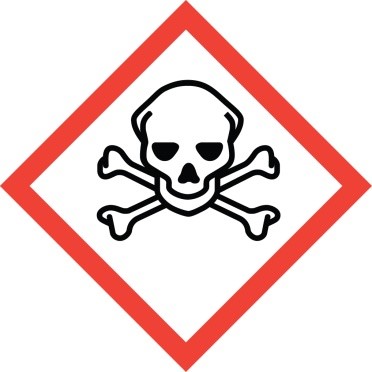


Hazard Statements:
H250 Catches fire spontaneously if exposed to air.
H261 In contact with water releases flammable gases.
H302 Harmful if swallowed.
H332 Harmful if inhaled.
H373 May cause damage to kidneys through prolonged or repeated exposure.
Precautionary Statements:
Prevention
P210 Keep away from heat, sparks, open flames, and hot surfaces. No smoking.
P222 Do not allow contact with air.
P223 Do not allow contact with water.
P231 Handle under inert gas.
P232 Protect from moisture.
P260 Do not breathe dust.
P270 Do not eat, drink, or smoke while using this product.
P280 Wear protective gloves, protective clothing, eye protection, and face protection.
Response
P370 + P378 In case of fire, use Class D dry powder extinguishing agent specifically approved for metal fires.
Do NOT use water, foam, or carbon dioxide directly on burning uranium hydride.
P335 + P334 Brush off loose particles from skin. Immerse in cool water if thermal burns occur.
P301 + P312 IF SWALLOWED: Call a Poison Center or physician if you feel unwell.
P304 + P340 IF INHALED: Remove person to fresh air and keep comfortable for breathing.
Storage: Store under an inert atmosphere whenever practical; tightly sealed; dry; cool; protected from moisture; away from oxidizers. Store in accordance with NRC license requirements.
Disposal: Dispose of contents and containers in accordance with EPA, NRC, DOT, and state radioactive waste regulations.
Other Hazards
Contains uranium; this material is radioactive; radiological hazards are regulated separately by the Nuclear Regulatory Commission (NRC) and are not classified under OSHA Hazard Communication requirements.
Maintain exposures As Low As Reasonably Achievable (ALARA).
SECTION 3. COMPOSITION / INFORMATION ON INGREDIENTS
| Component | CAS Number | EC Number | Concentration |
| Uranium Hydride (UH₃) | 51680-55-8 | 257-246-2 | ≥99% |
Impurities: No impurities known to contribute to hazard classification within product specifications.
Notes: Pyrophoric properties depend upon particle size, surface condition, and handling environment. Exposure to moisture or air may significantly increase fire risk.
SECTION 4. FIRST AID MEASURES
Description of First Aid Measures
General Advice: Remove the exposed person from the source of exposure; seek immediate medical attention for significant exposure; show this Safety Data Sheet to the attending physician; personnel providing assistance should avoid contaminating themselves.
Inhalation: Remove victim to fresh air immediately; keep warm and at rest; administer oxygen if breathing is difficult and trained personnel are available; if breathing has stopped, provide artificial respiration or CPR by trained personnel; obtain immediate medical attention; monitor for delayed pulmonary irritation and kidney toxicity.
Skin Contact: Remove contaminated clothing carefully; brush off dry particles before washing whenever practical; wash affected area thoroughly with soap and water for at least 15 minutes; if burning particles are embedded in the skin, seek immediate medical attention; wash contaminated clothing before reuse.
Eye Contact: Immediately flush eyes with plenty of water for at least 15 minutes; remove contact lenses if present and easy to do; continue rinsing; obtain immediate medical attention.
Ingestion: Call a Poison Center or physician immediately; rinse mouth thoroughly with water; do not induce vomiting unless directed by medical personnel; never give anything by mouth to an unconscious person.
Most Important Symptoms and Effects
Acute:
- Respiratory irritation
- Coughing
- Shortness of breath
- Eye irritation
- Skin irritation
- Gastrointestinal irritation
- Nausea
- Vomiting
Delayed:
- Kidney damage
- Heavy metal toxicity
- Internal radiological contamination
- Delayed respiratory effects
Notes to Physician: Treat symptomatically.
Monitor renal function, electrolyte balance, and respiratory status.
For suspected internal radioactive contamination, consult a physician experienced in radiological medicine.
SECTION 5. FIREFIGHTING MEASURES
Suitable Extinguishing Media
For burning uranium hydride, use:
Class D dry powder extinguishing agent specifically approved for combustible metal fires (for example, sodium chloride–based or graphite-based Class D agents).
For surrounding combustible materials that have not involved the uranium hydride, use extinguishing media appropriate for those materials while avoiding direct application to the hydride.
Unsuitable Extinguishing Media
Do NOT use:
- Water
- Water spray
- Foam
- Carbon dioxide
- Halogenated extinguishing agents
These agents may react with uranium hydride or be ineffective on combustible metal fires.
Specific Hazards
Material may ignite spontaneously upon exposure to air.
Contact with moisture may generate hydrogen gas, creating an additional fire and explosion hazard.
Thermal decomposition may produce:
- Uranium oxides
- Hydrogen
- Toxic metal fumes
Radioactive contamination may occur if containers rupture.
Protective Equipment for Firefighters
Wear positive-pressure SCBA
- Full structural or chemical protective clothing
Avoid disturbing burning material.
Prevent contaminated runoff from entering waterways.
Collect contaminated extinguishing media for disposal as radioactive waste.
SECTION 6. ACCIDENTAL RELEASE MEASURES
Personal Precautions: Evacuate unnecessary personnel; eliminate ignition sources; avoid breathing dust; avoid contact with air whenever practical; prevent contact with moisture; wear appropriate PPE.
Environmental Precautions: Prevent release to drains, groundwater, surface water, and soil.
Notify appropriate authorities if contamination occurs.
Methods for Containment and Cleanup: Do not use water for cleanup; carefully collect spilled material using clean, dry, non-sparking tools.
Small spills may be covered with dry mineral oil or maintained under an inert atmosphere if consistent with facility procedures.
Place recovered material into compatible, sealed containers suitable for pyrophoric radioactive waste.
Decontaminate the area according to the facility Radiation Protection Program.
SECTION 7. HANDLING AND STORAGE
Precautions for Safe Handling
Handle only by trained personnel.
Whenever practical, handle under inert gas; minimize exposure to air; prevent moisture contact.
Avoid dust formation, inhalation, skin contact, and eye contact.
Use a glove box, inert atmosphere enclosure, or local exhaust ventilation where appropriate.
Maintain radioactive exposure As Low As Reasonably Achievable (ALARA).
Conditions for Safe Storage
Store: Tightly sealed, dry, cool, under inert atmosphere whenever practical, and protected from humidity.
Protect containers from: Impact, puncture, heat, and ignition sources.
Incompatible Materials
Keep away from: Water, moisture, oxidizing agents, acids, halogenated compounds, and combustible materials.
SECTION 8. EXPOSURE CONTROLS / PERSONAL PROTECTION
Occupational Exposure Limits
No OSHA PEL has been established specifically for uranium hydride.
Apply occupational exposure limits established for soluble or insoluble uranium compounds, as appropriate to the workplace exposure assessment and applicable regulations.
Users should verify the current OSHA, ACGIH, and NIOSH exposure limits relevant to their operations.
Engineering Controls
Provide a glove box or inert atmosphere enclosure whenever practical; local exhaust ventilation; HEPA filtration where particulate generation is possible; emergency eyewash station; safety shower.
Radiological work should comply with the facility Radiation Protection Program.
Personal Protective Equipment
Eye Protection:
- ANSI Z87.1 chemical splash goggles
- Face shield when splash or particle hazards exist
Skin Protection:
Wear flame-resistant laboratory coat or protective clothing suitable for pyrophoric materials; nitrile or equivalent chemically resistant gloves appropriate for the task; closed-toe shoes.
Use additional protective equipment as required by the facility’s radiological controls.
Respiratory Protection:
Where engineering controls are inadequate, use a NIOSH-approved particulate respirator appropriate for uranium-containing particulates.
For emergencies, unknown concentrations, firefighting, or oxygen-deficient atmospheres:
- Positive-pressure SCBA
Respiratory protection programs shall comply with OSHA 29 CFR 1910.134.
Hygiene Measures: Wash thoroughly after handling; remove contaminated clothing before leaving the work area; do not eat, drink, or smoke where this product is handled; routinely monitor work surfaces for radioactive contamination in accordance with the facility’s radiation protection procedures.
SECTION 9. PHYSICAL AND CHEMICAL PROPERTIES
| Property | Value |
| Appearance | Dark gray to black crystalline powder or solid |
| Physical State | Solid |
| Color | Dark gray to black |
| Odor | Odorless |
| Odor Threshold | No data available |
| pH | Not applicable (insoluble solid) |
| Melting Point / Freezing Point | Decomposes before melting |
| Initial Boiling Point | Not applicable |
| Flash Point | Not applicable (pyrophoric solid) |
| Evaporation Rate | Not applicable |
| Flammability | Pyrophoric solid; ignites spontaneously upon exposure to air |
| Upper/Lower Explosive Limits | Not applicable |
| Vapor Pressure | Negligible |
| Vapor Density | Not applicable |
| Relative Density | Approximately 10.9–11.0 g/cm³ |
| Solubility | Reacts with water; insoluble |
| Partition Coefficient (log Kow) | Not applicable (inorganic substance) |
| Auto-ignition Temperature | Ignites spontaneously upon exposure to air |
| Decomposition Temperature | No reliable data available |
| Viscosity | Not applicable |
| Explosive Properties | Not classified as explosive |
| Oxidizing Properties | Not an oxidizer |
SECTION 10. STABILITY AND REACTIVITY
Reactivity:
Pyrophoric material.
May ignite spontaneously upon exposure to air.
Reacts with water and moisture to produce hydrogen gas.
Chemical Stability:
Stable only under recommended storage conditions.
Protect from air, moisture, and elevated temperatures.
Possibility of Hazardous Reactions:
May ignite spontaneously in air.
Reaction with water may release flammable hydrogen gas.
Dust may present an increased fire hazard.
Conditions to Avoid: Avoid exposure to air, moisture, water, sparks, open flames, heat, oxidizing conditions, and mechanical impact that generates dust.
Incompatible Materials: Keep away from water, steam, humid air, oxidizing agents, mineral acids, halogens, nitrates, and peroxides.
Hazardous Decomposition Products:
Fire or decomposition may generate hydrogen gas, uranium oxides, and toxic uranium fumes.
SECTION 11. TOXICOLOGICAL INFORMATION
Likely Routes of Exposure
- Inhalation
- Ingestion
- Skin contact
- Eye contact
Symptoms Related to Exposure
Inhalation: May cause respiratory irritation, coughing, and shortness of breath.
Airborne uranium-containing particles may be deposited in the lungs and contribute to systemic heavy-metal toxicity.
Skin Contact: May cause irritation, contamination, and thermal burns if pyrophoric particles ignite.
Eye Contact: May cause severe irritation, redness, tearing, and pain.
Ingestion: May be harmful if swallowed.
Symptoms may include nausea, vomiting, abdominal pain, and kidney injury.
Delayed and Chronic Effects
Repeated exposure may cause kidney damage (primary target organ), heavy-metal toxicity, liver effects, and hematological changes.
Internal uptake of radioactive uranium contributes to radiological dose in addition to chemical toxicity.
Acute Toxicity
Harmful if swallowed; harmful if inhaled.
Skin Corrosion / Irritation: May cause mild irritation.
Serious Eye Damage / Irritation: May cause serious eye irritation.
Respiratory Sensitization: No data available.
Skin Sensitization: No data available.
Germ Cell Mutagenicity: No adequate data available. Ionizing radiation may increase mutation risk following significant internal exposure.
Carcinogenicity
No component is listed by:
- OSHA
- NTP
- IARC
as a chemical carcinogen at reportable concentrations.
Long-term internal exposure to uranium may increase cancer risk because of ionizing radiation.
Reproductive Toxicity: No adequate human data available.
Specific Target Organ Toxicity: Single Exposure
No classification.
Repeated Exposure: Category 2
Target organ: Kidneys
Aspiration Hazard: Not applicable.
SECTION 12. ECOLOGICAL INFORMATION
Toxicity: No complete ecotoxicological data available; prevent environmental release; uranium compounds may present hazards to aquatic organisms depending upon oxidation state and environmental conditions.
Persistence and Degradability: Inorganic substance; not biodegradable.
Bioaccumulative Potential: Limited data available; uranium may accumulate in sediments and soils.
Mobility in Soil
Reacts with moisture.
Transformation products may migrate depending upon:
- pH
- groundwater chemistry
- oxidation state
Results of PBT and vPvB Assessment: Not applicable for inorganic substances.
Other Adverse Effects: Release of uranium-containing material into the environment should be avoided. Dispose of contaminated material in accordance with applicable radioactive waste regulations.
SECTION 13. DISPOSAL CONSIDERATIONS
Waste Treatment Methods
Dispose of this material in accordance with all applicable federal, state, and local regulations.
Because uranium hydride contains uranium and is radioactive, disposal may require compliance with:
- U.S. Nuclear Regulatory Commission (NRC)
- Agreement State regulations
- U.S. Environmental Protection Agency (EPA)
- U.S. Department of Transportation (DOT)
Do not dispose of material in: Sanitary sewer systems, storm drains, surface waters, soil, or ordinary trash.
Pyrophoric residues should be maintained under appropriate inert conditions until rendered non-reactive or transferred to an authorized radioactive waste disposal facility.
Contaminated Packaging: Containers may retain hazardous residues.
Empty containers should be handled with the same precautions as the product until properly decontaminated.
Dispose of contaminated packaging through an authorized radioactive waste management program.
Waste Classification: Waste characterization shall be performed before disposal in accordance with applicable EPA, NRC, state, and local regulations.
SECTION 14. TRANSPORT INFORMATION
IMPORTANT: Transportation classifications for uranium hydride require evaluation of both its radiological and chemical hazards. Final classification depends on radionuclide activity, isotope composition, quantity, packaging, and the applicable transport regulations. Each shipment should be reviewed by a qualified HazMat shipping specialist or Radiation Safety Officer (RSO).
U.S. DOT (49 CFR)
Transport classification shall be determined according to radionuclide activity, pyrophoric properties, fissile status (if applicable), package design, transport index, and exclusive-use requirements (if applicable).
The appropriate UN number and hazard class shall be assigned based on the complete hazard profile and regulatory requirements.
IMDG Ship in accordance with the current International Maritime Dangerous Goods (IMDG) Code.
IATA Ship in accordance with the current IATA Dangerous Goods Regulations.
Environmental Hazards: Prevent release into the environment.
Special Precautions: Only personnel trained in the transportation of radioactive and pyrophoric materials should prepare this product for shipment. Shipments must comply with all applicable DOT, IATA, IMDG, NRC, and state regulations.
SECTION 15. REGULATORY INFORMATION
OSHA
This product is classified as hazardous under:
29 CFR 1910.1200
Hazard Communication Standard.
TSCA
Users should verify TSCA applicability or exemptions for radioactive materials.
SARA 311/312
Hazard Categories:
- Flammable (Pyrophoric)
- Acute Health Hazard
- Chronic Health Hazard
- Specific Target Organ Toxicity
SARA 313 Users should determine reporting requirements based on annual inventory and applicable threshold quantities.
CERCLA Users should verify current reportable quantities applicable to uranium compounds.
RCRA Waste characterization shall be completed before disposal.
California Proposition 65 Users should verify current California Proposition 65 requirements.
NRC Possession, transfer, storage, use, and disposal of this product may require a radioactive materials license issued by the U.S. Nuclear Regulatory Commission or an Agreement State regulatory agency.
International Regulations: Users are responsible for complying with all applicable import, export, and transportation regulations governing radioactive and pyrophoric materials.
SECTION 16. OTHER INFORMATION
Full text of H-statements available upon request.
HMIS: Health 3*, Flammability 0, Physical Hazard 0
NFPA: Health 4, Fire 0, Reactivity 0
Copyright © 2015 International Bio-Analytical Industries, Inc.
Permission is granted to make unlimited paper copies for internal use only.
International Bio-Analytical Industries, Inc. requires recipients of its materials to comply with 29 CFR 1910.1200(h), which mandates that employers provide employees with effective information and training on hazardous chemicals present in the workplace.
The information contained in this Safety Data Sheet is believed to be accurate as of the date of revision and is provided in good faith. However, this information is intended to serve as a guide only, and recipients are encouraged to exercise independent judgment regarding its accuracy, completeness, and suitability for their specific applications. International Bio-Analytical Industries, Inc., shall not be held liable for any direct or indirect damage resulting from the use of this information.
International Bio-Analytical Industries, Inc. makes no warranties, express or implied, including, but not limited to, warranties of merchantability or fitness for a particular purpose. This information is provided without warranty, and any use of the product that does not conform to this Safety Data Sheet, or that is used in combination with any other product or process, is the sole responsibility of the user.
Revision Date: 03/25/2026