
SECTION 1: IDENTIFICATION
Product identifier: Uranyl Orthophosphate
Other means of identification: Uranyl Hydrogen Phosphate Tetrahydrate; Uranyl Phosphate
Chemical formula: UO₂(HPO₄)·4H₂O
Molecular formula: H₉O₁₀PU
CAS RN: 18433-48-2
Molecular weight: 438.068 g/mol
Recommended use: Laboratory chemicals; manufacture of substances.
Restrictions on use: For trained personnel and controlled laboratory/industrial use. Not for consumer use.
Supplier
International Bio-Analytical Industries, Inc.
3495 N. Dixie Hwy. Unit #8
Boca Raton, FL 33431
Tel: 561-826-0061
Fax: 561-892-8450
Emergency telephone
INFOTRAC
USA & Canada: 1-800-535-5053
International: 1-352-323-3500
SECTION 2: HAZARD(S) IDENTIFICATION
GHS classification
Acute Toxicity — Oral: Category 2
Acute Toxicity — Inhalation: Category 2
Specific Target Organ Toxicity — Repeated Exposure: Category 2
Hazardous to the Aquatic Environment — Acute: Category 2
Hazardous to the Aquatic Environment — Chronic: Category 2
Signal word: DANGER
Pictograms
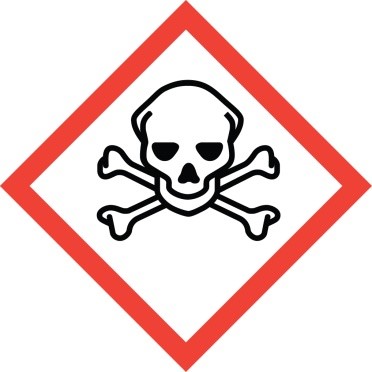
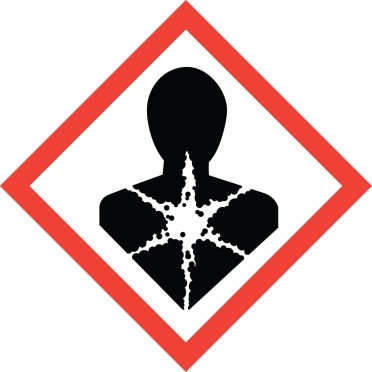
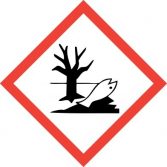
Radioactive-material labeling is a separate radiological control and is not a GHS pictogram.
Hazard statements
H300 + H330: Fatal if swallowed or if inhaled.
H373: May cause damage to organs through prolonged or repeated exposure.
H411: Toxic to aquatic life with long-lasting effects.
Precautionary statements
P260: Do not breathe dust/fume/gas/mist/vapors/spray.
P264: Wash thoroughly after handling.
P270: Do not eat, drink or smoke when using this product.
P271: Use only outdoors or in a well-ventilated area.
P273: Avoid release to the environment.
P280: Wear protective gloves, protective clothing and eye/face protection.
P284: Wear respiratory protection.
P301+P310: IF SWALLOWED: Immediately call a POISON CENTER/doctor.
P304+P340: IF INHALED: Remove person to fresh air and keep comfortable for breathing.
P316: Get emergency medical help immediately.
P320: Specific treatment is urgently required.
P330: Rinse mouth.
P391: Collect spillage.
P403+P233: Store in a well-ventilated place. Keep container tightly closed.
P405: Store locked up.
P501: Dispose of contents/container in accordance with applicable federal, state, local, radioactive-material and institutional requirements.
Other hazards
Radioactive material. Uranium-containing material may present an internal-contamination and ionizing-radiation hazard depending on isotopic composition, enrichment, activity, quantity and physical form. Control under the applicable radiation-safety program.
SECTION 3: COMPOSITION / INFORMATION ON INGREDIENTS
Chemical identity: Uranyl Orthophosphate
Formula: UO₂(HPO₄)·4H₂O
CAS RN: 18433-48-2
Molecular formula: H₉O₁₀PU
Molecular weight: 438.068 g/mol
Composition: Single substance.
SECTION 4: FIRST-AID MEASURES
Inhalation: Move person to fresh air and keep comfortable for breathing. If not breathing, provide artificial respiration by trained personnel. Obtain immediate medical attention. Notify the Radiation Safety Officer if radioactive intake is suspected.
Skin contact: Remove contaminated clothing. Wash thoroughly with soap and plenty of water. Obtain medical attention.
Eye contact: Flush eyes with water for at least 15–20 minutes. Remove contact lenses if present and easy to do. Continue rinsing. Obtain medical attention.
Ingestion: Rinse mouth. Do not induce vomiting unless directed by medical personnel. Never give anything by mouth to an unconscious person. Immediately obtain medical attention.
Most important symptoms/effects: Acute exposure may cause serious systemic toxicity. Repeated exposure may damage target organs. Inhalation or ingestion may also cause internal radioactive contamination depending on isotope/activity.
Special treatment: Specific treatment is urgently required following significant exposure; consult medical and radiation-safety personnel. Do not delay treatment of life-threatening chemical injury.
SECTION 5: FIREFIGHTING MEASURES
Suitable extinguishing media: Water spray, alcohol-resistant foam, dry chemical or carbon dioxide, as appropriate for the surrounding fire.
Specific hazards: Heating/fire may produce uranium oxides, carbon oxides, phosphorus-containing decomposition products and contaminated airborne particulate matter.
Firefighter protection: Wear positive-pressure SCBA and appropriate protective clothing where airborne contamination or hazardous decomposition products may occur. Prevent contaminated runoff from entering drains or waterways. Notify radiation-safety personnel.
SECTION 6: ACCIDENTAL RELEASE MEASURES
Personal precautions: Restrict access. Avoid dust formation and inhalation. Use appropriate chemical and radiological PPE. Ensure adequate ventilation. Notify the Radiation Safety Officer.
Environmental precautions: Prevent further leakage or spillage if safe. Do not allow material to enter drains, sewers, soil, or waterways. Avoid environmental release.
Containment/cleanup: Do not use compressed air. Avoid dry sweeping that creates airborne dust. Carefully collect material using methods that minimize dust, preferably with suitable HEPA-filtered equipment. Place material in closed, labeled containers and survey the area for radioactive contamination.
SECTION 7: HANDLING AND STORAGE
Safe handling: Avoid contact with skin and eyes. Avoid formation of dust/aerosols. Use local exhaust ventilation or a chemical fume hood. Do not eat, drink, or smoke while handling. Wash hands after handling.
Storage: Keep container tightly closed in a dry, well-ventilated location. Store in a designated radioactive-material area with controlled access. Protect container from physical damage.
Incompatibilities: Strong oxidizing agents as incompatible. Avoid strong oxidizers and other materials known to react with phosphate/uranyl compounds.
SECTION 8: EXPOSURE CONTROLS / PERSONAL PROTECTION
OSHA PEL: For uranium (as U), OSHA lists 0.25 mg/m³ as an 8-hour TWA for insoluble uranium compounds.
NIOSH / ACGIH: The OSHA annotated table identifies 0.2 mg/m³ as an 8-hour TWA and 0.6 mg/m³ STEL for insoluble uranium compounds, as U. Use the exposure limits applicable to the actual uranium form and workplace assessment.
Engineering controls: Use local exhaust ventilation and handle powdered material in a functioning chemical fume hood or equivalent containment. Use appropriate HEPA filtration where airborne radioactive contamination is possible.
Eye/face protection: Safety glasses with side shields or chemical splash goggles; use a face shield where significant particulate exposure is possible.
Skin protection: Chemical-resistant gloves; nitrile rubber 0.11 mm with 480-minute breakthrough for the cited test product. Glove selection must be verified for the actual use conditions.
Body protection: Protective laboratory clothing/overgarments as required by the radiation-safety program. Treat contaminated clothing as radioactive until surveyed.
Respiratory protection: Use a NIOSH-approved respirator selected under a written respiratory-protection program when exposure assessment requires it. For emergency/unknown concentrations, use positive-pressure SCBA. Respiratory protection is not a substitute for engineering controls.
Radiological controls: Follow RSO requirements for dosimetry, contamination surveys, controlled areas, radioactive-material handling, internal-dose assessment and contamination control.
SECTION 9: PHYSICAL AND CHEMICAL PROPERTIES
Physical state: Solid.
Appearance: Yellow crystalline solid.
Odor: No data available.
Molecular formula: H₉O₁₀PU.
Molecular weight: 438.068 g/mol.
Solubility: Insoluble in water.
pH: No applicable information available.
Melting/freezing point: No applicable product-specific information available.
Boiling point: No applicable product-specific information available; decomposition may occur before boiling.
Flammability: Not expected to be readily flammable.
Flash point: Not applicable.
Vapor pressure: No applicable information available.
Density: No applicable information available.
Partition coefficient: No applicable information available.
Auto-ignition temperature: No applicable information available.
Decomposition temperature: No data available.
Explosive/oxidizing properties: No applicable information available.
SECTION 10: STABILITY AND REACTIVITY
Reactivity: No hazardous reaction expected under recommended conditions.
Chemical stability: Stable under recommended storage conditions.
Hazardous reactions: No dangerous reactions are known under normal conditions.
Conditions to avoid: Avoid dust generation, excessive heat and contamination.
Incompatible materials: Strong oxidizing agents.
Hazardous decomposition products: Uranium oxides, carbon oxides and other decomposition products may be generated by heating/fire.
SECTION 11: TOXICOLOGICAL INFORMATION
Routes of exposure: Inhalation, ingestion, skin contact and eye contact.
Acute toxicity: LD50 oral, rat: 204 mg/kg.LD50 subcutaneous, rat: 8.3 mg/kg.
Skin corrosion/irritation: No data available.
Serious eye damage/irritation: No data available.
Respiratory/skin sensitization: No data available.
Germ cell mutagenicity: No data available.
Carcinogenicity: Radioactive material may produce cancer/genetic mutation. OSHA’s uranium exposure information identifies carcinogenicity concerns for uranium.
STOT — repeated exposure: May cause damage to organs through prolonged or repeated exposure.
Aspiration hazard: Not applicable to a solid.
Delayed effects: Conjunctivitis, blood disorders, and symptoms may be delayed. Uranium exposure may also cause internal radiological dose depending on isotope and activity.
SECTION 12: ECOLOGICAL INFORMATION
Ecotoxicity: Toxic to aquatic life with long-lasting effects.
Persistence/degradability: No product-specific data available.
Bioaccumulative potential: No product-specific data available.
Mobility in soil: No product-specific data available.
Other adverse effects: Avoid environmental release; uranium-containing material can create chemical and radiological contamination.
SECTION 13: DISPOSAL CONSIDERATIONS
Waste treatment: Do not dispose of with ordinary trash or discharge to drains. Dispose through a licensed radioactive-material/hazardous-waste facility in accordance with applicable federal, state, local, NRC/Agreement State, and institutional requirements.
Contaminated packaging: Do not reuse contaminated packaging. Survey and manage as radioactive waste as applicable.
SECTION 14: TRANSPORT INFORMATION
DOT: Final classification must be verified for the actual isotope, activity, quantity, package, and applicable exception before shipment.
Proper shipping name: Radioactive material, excepted package — limited quantity of material, only if the shipment meets all applicable requirements.
Hazard class: Class 7 — Radioactive Material.
Packing group / IMDG/IATA: Shipment-specific determination required. The shipper must determine the applicable modal requirements, package, marking, labeling and documentation.
Special precautions: Radiological transport classification is dependent on activity, radionuclide, quantity, package, and fissile status where applicable.
SECTION 15: REGULATORY INFORMATION
OSHA: 29 CFR 1910.1200 Hazard Communication Standard. OSHA PEL for uranium, insoluble compounds: 0.25 mg/m³ as U, 8-hour TWA.
DOT/PHMSA: Applicable federal requirements for radioactive-material transportation.
NRC/Agreement State: Uranium-containing radioactive material may be subject to NRC or Agreement State licensing and radiation-safety requirements.
SARA 311/312: Acute Health Hazard and Chronic Health Hazard.
Other listings: State right-to-know and environmental listings should be verified against the current regulatory status and actual product/isotopic composition. Unsupported categorical claims in the original SDS should not be treated as verified.
SECTION 16: OTHER INFORMATION
Copyright © 2015 International Bio-Analytical Industries, Inc.
Permission is granted to make unlimited paper copies for internal use only.
International Bio-Analytical Industries, Inc. requires recipients of its materials to comply with 29 CFR 1910.1200(h), which mandates that employers provide employees with effective information and training on hazardous chemicals present in the workplace.
The information contained in this Safety Data Sheet is believed to be accurate as of the date of revision and is provided in good faith. However, this information is intended to serve as a guide only, and recipients are encouraged to exercise independent judgment regarding its accuracy, completeness, and suitability for their specific applications. International Bio-Analytical Industries, Inc., shall not be held liable for any direct or indirect damage resulting from the use of this information.
International Bio-Analytical Industries, Inc. makes no warranties, express or implied, including, but not limited to, warranties of merchantability or fitness for a particular purpose. This information is provided without warranty, and any use of the product that does not conform to this Safety Data Sheet, or that is used in combination with any other product or process, is the sole responsibility of the user.
Revision Date: 03/27/2026